
B2B Radiance Oil Serum - Labote

Oxidation: explained

You don't always know it, but you often already practice antioxidation on your plate, and that's an excellent start. But just as sun supplements don't replace sunscreen, an antioxidant diet doesn't replace topical antioxidant care. The two complement each other to durably preserve the radiance and longevity of your skin. We'll explain everything.

You eat dark chocolate after dinner. You eat carrots, thinking about your complexion. You've heard that blueberries are "healthy." You sometimes drink green tea. You've read somewhere that olive oil is "full of antioxidants."

Without realizing it, you're already practicing antioxidation. Every day, on your plate.

What you instinctively do for your body, your skin needs too, but with different and complementary tools. Because oxidation is the invisible phenomenon that ages your skin every day.

What exactly is oxidation?

Oxidation is a chemical reaction in which a molecule loses electrons when it comes into contact with an oxidizing agent. This phenomenon occurs constantly in our bodies, as a result of normal cellular metabolism, but also due to external aggressions: UV rays, pollution, stress, tobacco.

You've seen it happen without naming it: a knife that rusts, butter that turns rancid. That's oxidation at work, the same chemical reaction, in two different materials.

In our cells, this phenomenon generates unstable molecules called free radicals. In excess, they damage cellular structures: membranes, proteins, DNA.

An antioxidant is a molecule capable of neutralizing these free radicals before they cause damage, just as lemon juice prevents an apple from browning. Dark chocolate, blueberries, green tea, carrots: all rich in antioxidants. Good for your body, good for your health.

What diet alone cannot do

Dietary antioxidants work from within. This is beneficial, but your skin is the organ most directly exposed to external aggressions. UV, pollution, and blue light generate free radicals directly on its surface.

Think of sun supplements, those beta-carotene capsules you take before holidays. They prepare the skin from within. But all their packaging bears the same statement: "does not exempt you from using sunscreen." and besides, it wouldn't even occur to us not to. Sunscreen acts directly where UV rays strike, on the surface, immediately.

It's exactly the same logic for daily antioxidant protection:

Food strengthens your defenses from within. Topical antioxidant care protects where aggressions directly attack. The two are complementary. Neither replaces the other.

What oxidation actually does to your skin

Oxidative damage accumulates silently over years before becoming visible in the mirror.

Collagen and elastin are prime targets for free radicals. Their progressive degradation results in loss of firmness, wrinkles that set in, and sagging skin tissue.

The skin barrier, rich in polyunsaturated lipids, is particularly susceptible to oxidation. When it weakens, the skin dehydrates more easily and becomes more sensitive and dull.

Melanin regulation is disrupted by free radicals, leading to the appearance of pigmentation spots that are often attributed solely to the sun, but which are more broadly linked to oxidative stress.

Preserving the skin's antioxidant capital

Your skin has its own antioxidant defenses. But this antioxidant capital decreases with age and is depleted by repeated exposures. At a certain point, it is no longer enough to compensate for daily aggressions.

This is where topical antioxidant care comes in: not to replace what your body already does, but to strengthen its protection where it is most needed.

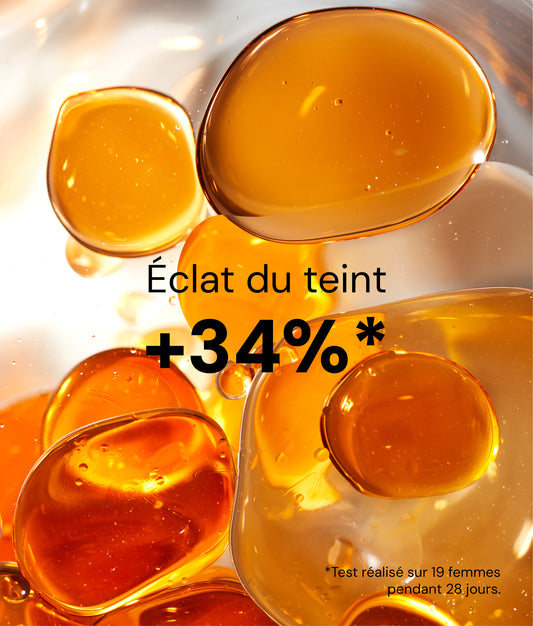
At Laboté, the Radiance Oil Serum combines two complementary fat-soluble antioxidants: Astaxanthin, which neutralizes free radicals inside cells and at their membrane, and Vitamin E, which specifically protects the lipids of the skin barrier against oxidation.

To go further, the Longevity Concentrate Serum contains copper peptides which are known to activate the Nrf2 pathway, stimulating the endogenous production of the skin's antioxidant defenses. The skin learns to protect itself.

  • L'impact de l'environnement sur votre peau - Labote
    Conseils/astucesScientifique

    The impact of the environment on your skin

    Comprendre les facteurs perturbateurs lié à l'environnement. Conseils pour protéger la barrière cutanée. Impact du style de vie sur la peau. L'effet de la pollution sur la peau.

1 of 2