Une peau sensible, c’est quoi exactement ?
Quand on parle de peau sensible, on ne fait pas référence à un type de peau (normale, sèche, mixte ou grasse) mais plutôt à un « état ». Une peau sensible est une peau fragile et intolérante. Elle se trouve facilement agressée par les éléments extérieurs - tels que le froid, le vent, le soleil, mais aussi certains produits cosmétiques - ou encore des facteurs internes tels que le stress et l’anxiété. Elle y réagit de façon excessive : c’est une peau réactive dont le seuil de tolérance est faible.
Pourquoi a-t-on la peau sensible ?
Avec l’âge, les changements hormonaux et l’hygiène de vie que nous adoptons (ou subissons)(vie en ville et pollution, stress, tabagisme, bonne ou mauvaise alimentation, eau calcaire …) la composition du film hydrolipidique de notre peau varie.
Or le film hydrolipidique est la barrière protectrice de notre peau, qui préserve sa fermeté, son élasticité et surtout, son confort. Le film hydrolipidique est là pour maintenir un taux d’hydratation optimal au niveau de la couche superficielle de notre épiderme. Mais aussi un pH acide de 5,5 qui empêche la pénétration de microorganismes nocifs pour la peau, et garde le microbiote cutané, son écosystème naturel, en bonne santé.
Il est composé d’une phase aqueuse, c’est-à-dire liquide : de sueur et d’eau. Et d’une phase grasse, ou huileuse, constituée par le sébum. L’équilibre entre ces deux phases est essentiel pour que le film hydrolipidique joue normalement son rôle.
Chez la peau sensible, cet équilibre est altéré, la laissant fragilisée, vulnérable aux changements de température, au taux d’humidité de l’air, aux pollens ou à certains produits. Elle est aussi surexposée aux bactéries. En réaction, se sentant menacée, la peau sensibilisée envoie des signaux qui se traduisent par des picotements, des rougeurs, ou une sensation de peau qui brûle.
Différencier peau sensible, couperose et allergie
Afin de bien cibler sa routine de soin, il est important de faire la différence entre trois problèmes de peau qui peuvent ponctuellement présenter des symptômes assez proches.
LA PEAU SENSIBLE
C’est une peau intolérante qui sur-réagit à des facteurs n’irritant pas normalement une peau saine (le froid ou la chaleur, le vent, le soleil, les pollens, le stress et l’anxiété, ou certains produits cosmétiques). Elle présente des rougeurs passagères, qui sont permanentes dans le cas de la couperose et de la rosacée.
LA COUPEROSE
Elle provoque aussi des rougeurs sur la peau, mais de façon permanente, et présente de petits vaisseaux dilatés sur le visage ( le plus souvent sur les ailes du nez, les joues et les pommettes ). Ces rougeurs peuvent s’accroître avec la consommation d’alcool et de café, le tabagisme ou une alimentation trop épicée. La couperose est en général le premier stade de la rosacée, qui en plus de rougeurs permanentes peut causer de l’acné.
L’ALLERGIE CUTANÉE
Ici la peau présente encore des rougeurs et des démangeaisons, mais celles-ci sont dues à une réaction allergique (pollens, poils d’animaux, produit détergent, traitement antibiotique …). Face à un allergène, le système immunitaire déclenche un système d’alarme, qui peut aller jusqu’à l’apparition de plaques ou de gonflements.



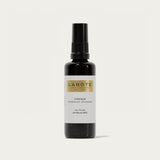 Le soin concerné
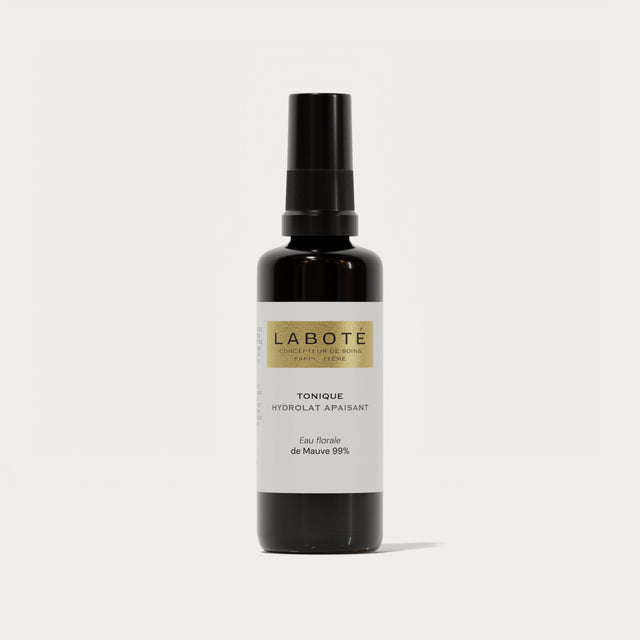
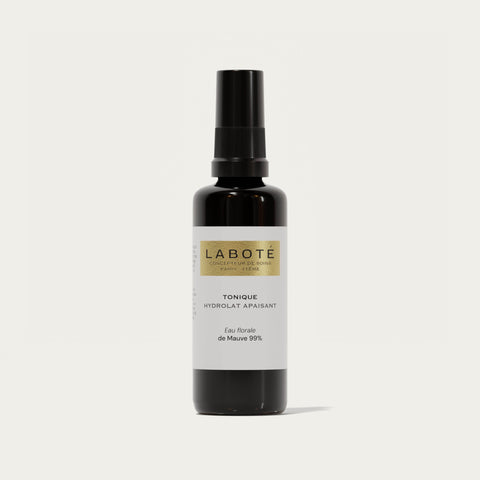
Soothing Hydrosol Tonic
Le soin concerné
Soothing Hydrosol Tonic