Learn how to decipher the composition of a cosmetic product

You are used to buying cosmetic products and you have probably tried to decipher the long list of cosmetic ingredients specified on the labels, a mixture of English and Latin, ambiguous claims or obscure gibberish!
They do, however, explain the composition of your product!
This is the INCI list.

THEMES
Tips/Tricks • Ingredients • Scientific

What is an INCI list?

The International Nomenclature of Cosmetic Ingredients, or INCI, is an abbreviation for "International Nomenclature of Cosmetic Ingredients," which was developed in 1973 by the Cosmetic, Toiletry and Fragrance Association (CTFA), the American association of cosmetic manufacturers.

The names of all possible ingredients in cosmetic products (more than 16,000 today) have been defined and recorded in a nomenclature.

This information, easily accessible to the consumer, allows them to verify the exact composition of a product.

Everything is written in Latin and English to facilitate international understanding. Specifically, the Latin terms indicate the botanical name of the plant (natural products) and the English terms, the chemical substances.

Consumers benefit from greater transparency and understanding thanks to the analysis of their cosmetics' ingredients. They can better identify the presence of specific ingredients that could potentially cause skin irritation, allergies, or intolerances.

In Europe, its use has been mandatory for cosmetics since 1998: all cosmetics must provide on the product or its packaging the complete list of ingredients in descending order of quantity and under their INCI name.

The 3 commandments for properly deciphering an INCI list?

The components are presented in descending order of their presence in the product (by weight or percentage), that is to say the first one presented in the list is the one present in the largest quantity, and so on.

This means, for example, that a product whose list begins with "Aqua" and/or "Water" is composed mostly of… water.

Below 1%, the components can be listed in any order and will appear at the end of the INCI list. For example, a preservative that is harmful to health, at a concentration of 0.9%, could be listed after an essential oil at a concentration of 0.1%!

Therefore, reading them should not be neglected.

The first five ingredients make up about 80% of the formula. However, they aren't enough to judge a product's effectiveness. In fact, some ingredients, especially active ingredients, only need to be present in small doses to be effective! These are often found at the end of the ingredient list, even though they can be highly effective for your skin concerns. In excessive quantities, they would also be poorly tolerated, despite being safe.

Conclusion: to get an idea, it is essential to know how to identify the different ingredients, and understand their impact on your skin tissue.

RECOGNIZING THE MAJOR FAMILIES OF INGREDIENTS

  • Botanical actives: they are easy to spot because they are named in Latin, followed mostly by “extract” (for a plant extract) or “oil” (in the case of a vegetable oil).

  • Colours: these are marked CI, followed by numbers.

  • Silicones: they mostly end in -icone (dimethicone) or -iloxane.

  • PEGs: these ingredients are derived from Polyethylene Glycol. Their manufacturing process is also one of the most polluting in the cosmetics industry.

  • Allergens: these are usually found at the end of the list: linalool, geraniol…

  • Synthetic preservatives: phenoxyethanol, parabens, BHT, and BHA are the most commonly used.

  • Natural preservatives: these include benzoic acid, sorbic acid.

Many substances known to be dangerous to health are unfortunately still present in many healthcare products.

The pros and cons of the INCI list?

Listing all ingredients allows consumers to know exactly what cosmetics contain and to identify components that may cause allergies. Furthermore, every INCI list is written entirely in English and Latin, so that countries that have adopted this nomenclature can easily understand it.

However, this nomenclature has its limitations:

  • Thus, the exact quantity of ingredients present in the formula is not known, because indicating their concentrations is not mandatory in order to protect the manufacturers' secret recipes.

  • Similarly, the origin and manufacturing process of the components are never mentioned. Therefore, it is impossible to know, for example, whether they are genetically modified or not.

  • Finally, an INCI list gathers the ingredients of a single formula, but reveals nothing about the manufacturer's business model. In other words, it's impossible to verify the product's true naturalness, its packaging, etc.

Before purchasing any cosmetic product, it is therefore advisable to research the brand as a whole, in addition to analyzing its INCI list to ensure that it is part of the Slow Cosmetics approach.

Laboté, a committed and engaging brand

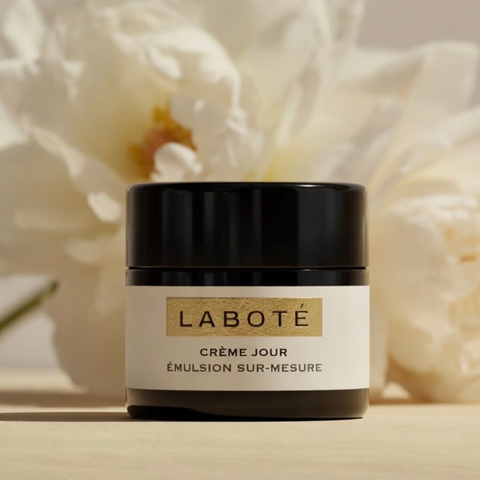
At Laboté, we have chosen to allow only ingredients beneficial to your skin in our formulas. In our Parisian laboratory, where all our products are manufactured, only fully biocompatible ingredients that offer advantages in terms of efficacy or formulation are used.

Our pharmacists always incorporate a maximum of natural ingredients (89% minimum), combined with the performance of raw materials derived solely from gentle chemical processes, respectful of the planet and your skin.

For our Doctors of Pharmacy, cleanliness is the number one constraint: all our formulas are made from ingredients with no presumed risk to health, unlike endocrine disruptors, carcinogenic substances or allergens.

What is the point of adding colorings to your cream to make it look pretty?

Our Doctors of Pharmacy free themselves from all extraneous components, to focus on the essentials and formulate healthy and fresh care.

They are also on constant alert and regularly update the long list of these harmful ingredients .

Therefore, you will never find parabens, PEGs, chemical sunscreens, mineral oils, phthalates, BHT, or BHA in the composition of any of our cosmetics.

  • Peau déshydratée : causes & conséquences - Labote
    PréoccupationsScientifique

    Dehydrated skin: causes & consequences

    Reconnaître les symptômes d'une peau déshydratée. Les bons gestes à adopter pour prendre soin de sa peau déshydratée. Comprendre les causes de la déshydratation de la peau.

  • Comment choisir sa crème hydratante ? - Labote
    Conseils/astucesScientifique

    How to choose your moisturizer?

    Trouvez la crème pour votre peau. Crème hydratante pour peau grasse. Crème visage pour peau sensible et déshydratée. La crème hydratante est essentiel pour une routine efficace.

1 of 2