Acne scars: how to get rid of them?

To get rid of an acne scar, you sometimes need a little patience and consistent application of targeted treatments. Combine exfoliation and aromatherapy for real, long-term results. From pigmentation spots to deep scars, Laboté shares its advice.

THEMES
Concerns • Tips/Tips • Care

How does an acne scar form?

An acne scar appears following a poorly treated inflammatory lesion, such as a large pimple that lasts for several days. The continuity of the skin has been interrupted by trauma, often of mechanical origin. The skin is then unable to regenerate properly at the site of the wound. It is therefore temporarily replaced by granulation tissue (connective tissue made up of collagen fibers).

Skin suffering from severe acne (nodules, cysts, large pimples) is most prone to this phenomenon. Although scarring is an integral part of wound healing, a pimple scar is often considered unsightly. Most are superficial; you can reduce their appearance fairly easily. Others are due to abnormalities in the healing process and are unfortunately almost irreversible.

The pigmented scar

WHAT IS A PIGMENTATION PIMPLE SCAR?

A pigmented acne scar is the most superficial type of acne scar. It's not even a scar in the true sense of the word. Rather, it's a temporary change in skin color, without any significant alteration to its texture. It produces small red or brown spots, sometimes with discoloration (depending on your skin type). However, it can be quite stubborn and take several months to disappear.

WHAT SKINCARE ROUTINE SHOULD I ADOPT?

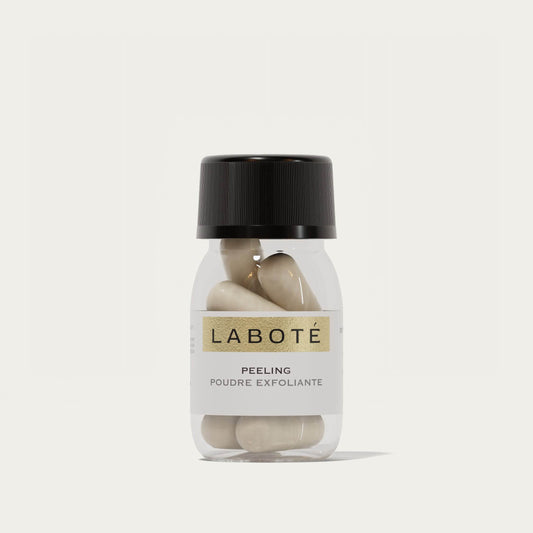
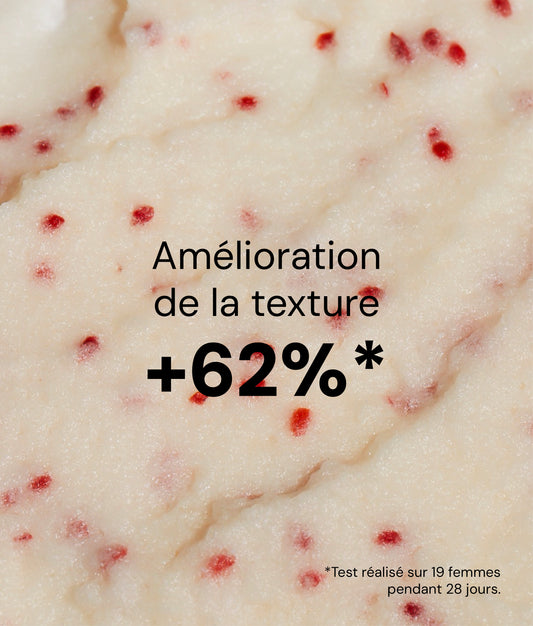
Smooth the surface by stimulating cell renewal with a chemical exfoliant. Unlike traditional salicylic acid and vitamin A, our exfoliating powder peel has the advantage of combining gentleness and effectiveness. It is precisely formulated to remove dead cells, even out skin tone, and smooth skin texture without causing irritation. By allowing new cells, not yet laden with pigment, to take their place, the dark spot is diminished.

Embrace essential oils and aromatherapy for their powerful ability to regenerate and correct hyperpigmented areas. Two targeted treatments can be used alternately depending on the type of mark/colored scar you have: the Anti-Spot Concentrated Targeted Treatment for "simple spots" and the Repairing Concentrated Targeted Treatment, used every other night if you have a raised scar. The repairing effect of rockrose (Cistus ladaniferus) combines with cultivated carrot essential oil to fade localized hyperpigmentation in the Anti-Spot Concentrated Targeted Treatment . The combination of lavender and rockrose promotes healthy healing.

Atrophic and hypertrophic scars

RECOGNIZING THE MOST SEVERE FORMS

Severe acne can leave deep scars and alter the skin's texture. This is the case with atrophic acne scars. These scars are small pits that "dig" into the skin's surface, which is why they are also called "ice pick scars." They appear when the skin has not been able to regenerate enough connective tissue to fill the depression left by the pimple.

The most severe (but also the rarest) acne scar is called a hypertrophic scar. It differs from an atrophic scar: instead of forming a small hole, it is characterized by a raised mass. In the urgency of the process, the skin produced more fibrous tissue than necessary, but of lower quality. It takes several years for it to flatten. As for a keloid scar, it is permanently raised.

CHOOSE THE SUITABLE ASSETS

These scars fall under the purview of dermatology and surgery. However, you can incorporate the following active ingredients into your skincare routine to support your skin's natural functions.

  • Centella asiatica: stimulates collagen synthesis to plump the skin.
  • Aloe vera: rich in polysaccharides, it traps water in the skin tissue.
  • Nigella: soothes, purifies and regulates sebaceous secretions.

How to avoid a pimple scar?

Prevention is better than cure! To avoid acne scars, the wisest course of action is to refrain from touching your comedones (painful pimples, blackheads, milia, enlarged pores, etc.). Doing so risks worsening the inflammation and spreading germs across your face. Apply our concentrated Purifying Targeted Treatment as soon as you feel a pimple coming on. Its combination of cleansing, purifying, and antiseptic essential oils helps speed up the disappearance of the pimple and thus minimize the inflammatory phase. The less intense the inflammation, the lower the risk of scarring.

PROTECT YOURSELF FROM THE SUN

Although essential for vitamin D synthesis, sun exposure should be limited if you have acne. UV rays tend to darken acne scars and delay their healing. Therefore, protect yourself with SPF before going outside.

  • Acné de l’adulte : comment s’en débarrasser ? - Labote
    Conseils/astucesPréoccupations

    Adult acne: how to get rid of it?

    Boutons sur le menton, les joues ou la mâchoire ? C'est souvent de l'acné hormonale. Causes, signes distinctifs et traitements naturels efficaces.

1 of 2