L'eczéma, caractéristique d'une peau atopique
La peau atopique, ou pour être plus précis, la peau sujette à la dermatite atopique, présente une dermatose (inflammation de la peau) chronique, dont la fréquence s’intensifie au fil des années. La dermatite atopique se caractérise notamment par une peau très sèche et très sensible, particulièrement réactive aux agressions. La barrière cutanée, altérée, laisse passer plus facilement les allergènes se trouvant dans l’air, dans les produits cosmétiques ou encore dans les produits alimentaires. Enfin, il peut également y avoir une accentuation du phénomène liées aux habitudes de soins : un nettoyage trop fréquent de la peau l’assèchera davantage, ainsi que l’utilisation de produits trop décapants, qui déstabilisent l’écosystème cutané.
Les signes cliniques d’une peau en crise d’eczéma sont les suivants :
- Érythèmes (rougeurs) liés à la vasodilatation
- Démangeaisons
- Oedèmes localisés
- Vésicules suintantes
- Squames
- Croûtes
- Excoriations (petites écorchures)
Il s’agit d’une peau qui tiraille souvent et dont l’application d’une crème au moins 2 fois par jour est nécessaire.
LES BRILLANCES
Une peau atopique peut aussi avoir des brillances que l’on appelle réactionnelles. Elles sont majoritairement dues à une routine cosmétique trop agressive qui décape le film protecteur de votre peau, le film hydrolipidique. Lorsque la peau se trouve agressée par un produit abrasif, elle sur-produit du sébum afin de restaurer son film protecteur (mécanisme d’autodéfense) or plus elle produit du sébum, plus votre peau sera sujette aux brillances.
LES IMPERFECTIONS
Elles peuvent survenir à cause de cette sur-production de sébum qui a tendance à obstruer les pores de la peau. Les imperfections peuvent aussi être liées au stress ou encore à un dérèglement hormonal.
Votre protocole de soins sur-mesure établi par nos experts
Découvrez la routine de soins pour prendre soin de votre peau sujette à l’eczéma, aux brillances et imperfections tout en travaillant sur l’anti-âge.
CONSEIL N°1 : LE NETTOYAGE, PREMIER GESTE ESSENTIEL DE SOIN
Le film protecteur de votre peau est une émulsion : il se compose d’une phase grasse (sébum et lipides divers) et d’une phase aqueuse (sueur, eau et microorganismes). C’est lui qui s’oppose à la pénétration de substances étrangères, régule l’hydratation de votre peau et la flore cutanée. Le film hydrolipidique confère à votre peau sa douceur, sa souplesse et son éclat. Il est donc indispensable de le préserver grâce à un nettoyage doux. En effet, si celui-ci se révèle trop agressif voire décapant, la barrière cutanée sera altérée.
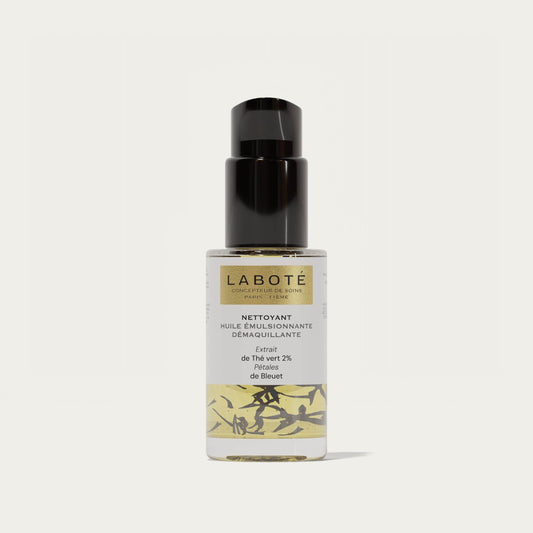
La préparation magistrale cosmétique du Nettoyant huile démaquillante est dite biomimétique : sa texture huileuse à appliquer sur la peau élimine toutes les substances qui ont de l’affinité avec les corps gras comme le maquillage et la pollution. Sa texture se transforme en lait après avoir ajouté un peu d’eau afin de piéger cette fois-ci les substances qui ont une affinité avec l’eau : la sueur et les métabolites cutanés. Il permet ainsi un double nettoyage en douceur. Sa formule est riche en actifs de plantes médicinales comme le Bleuet aux vertus apaisantes et le Thé Vert pour ses propriétés anti-inflammatoires et anti-bactériennes.
CONSEIL N°2 : LE SOIN QUOTIDIEN, UNE ACTION SUR LE LONG TERME, DE JOUR COMME DE NUIT
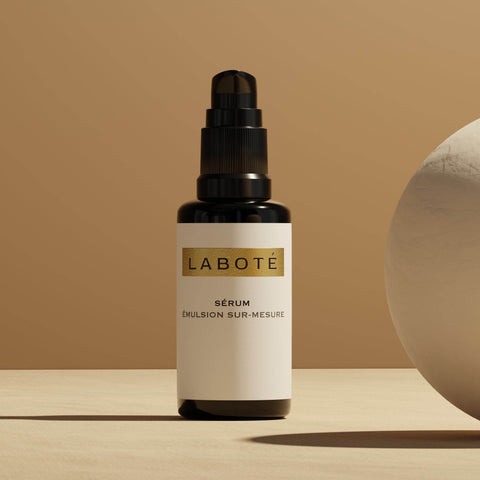
Il faut une formule qui cible simultanément l’ensemble de vos besoins biologiques. Pour votre peau, nos Docteurs en Pharmacie recommandent une texture onctueuse qui viendra agir sur les rougeurs grâce au Calendula. Les imperfections et cicatrices seront quant à elles ciblées par le Bakuchiol et la nutrition avec l’huile de Camélia. Lorsque c’est nécessaire, nos Docteurs en Pharmacie ajoutent de l’Acmella, botox végétal pour prévenir les signes de l’âge et le vieillissement de la peau, en association avec la Centella Asiatica pour booster la synthèse des fibres, renouveler la peau et estomper les cicatrices.
La préparation magistrale cosmétique de votre crème de nuit sera riche en Fucus et Nigelle pour une action régénérante et purifiante. L’action complémentaire de ces deux soins pour le jour et la nuit est essentielle car elle permet de diffuser progressivement, sans agresser la peau, les actifs purifiants.
CONSEIL N°3 : LE SOIN CIBLÉ POUR CORRIGER RAPIDEMENT LES IMPERFECTIONS
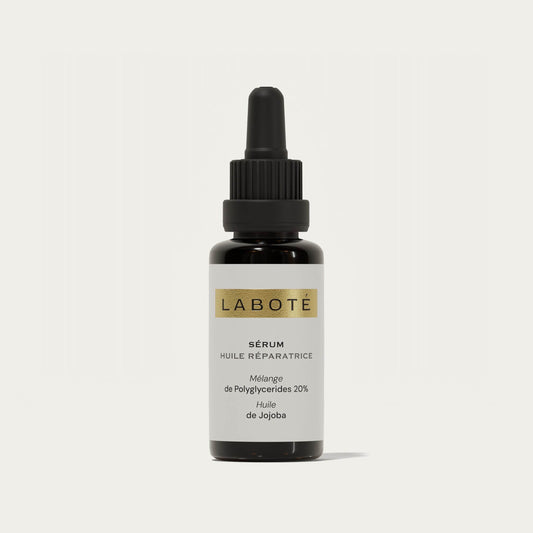
Ce soin unique est composé de deux huiles végétales, Nigelle et Jojoba, aux actions purifiantes et séborégulatrices, et de quatre huiles essentielles dont l’action synergique vient réduire les impuretés cutanées : Tea Tree, Lavande Officinale, Petit Grain de Bigarade et Romarin. Leurs propriétés permettent d’agir sur toutes les étapes du cycle de vie d’un bouton. Pour les peaux atopiques, nous déconseillons les allergènes. Toutefois, pour le soin ciblé, l’application est locale et à durée limitée (uniquement pendant la durée de l’éruption cutanée et sans dépasser 3 semaines). Ainsi, la tolérance peut être maitrisée.
CONSEIL N°4 : LES BONS GESTES DE MAQUILLAGE
Il est parfois compliqué de trouver le bon fond de teint lorsque la peau est sèche, sensible et sujette aux imperfections. En effet, les imperfections surviennent lorsque les pores de la peau sont bouchés par un surplus de sébum mais aussi lorsque l’on utilise des produits comédogènes. Bien souvent les fonds de teint liquides contiennent des molécules comédogènes. C’est pourquoi nos Docteurs en Pharmacie vous recommandent les fonds de teint minéraux en poudres libres. Leur composition est souvent naturelle, avec une protection spf pour prévenir les effets des radicaux libres sur la peau, laisse respirer la peau sans obstruer les pores. Ce geste permet de réduire l’apparition d’imperfections et de brillances.


 Le soin concerné
Custom serum
Le soin concerné
Custom serum